
Pind daan at Kashi, Gaya and the Sangam: a practical guide
· 8 min read
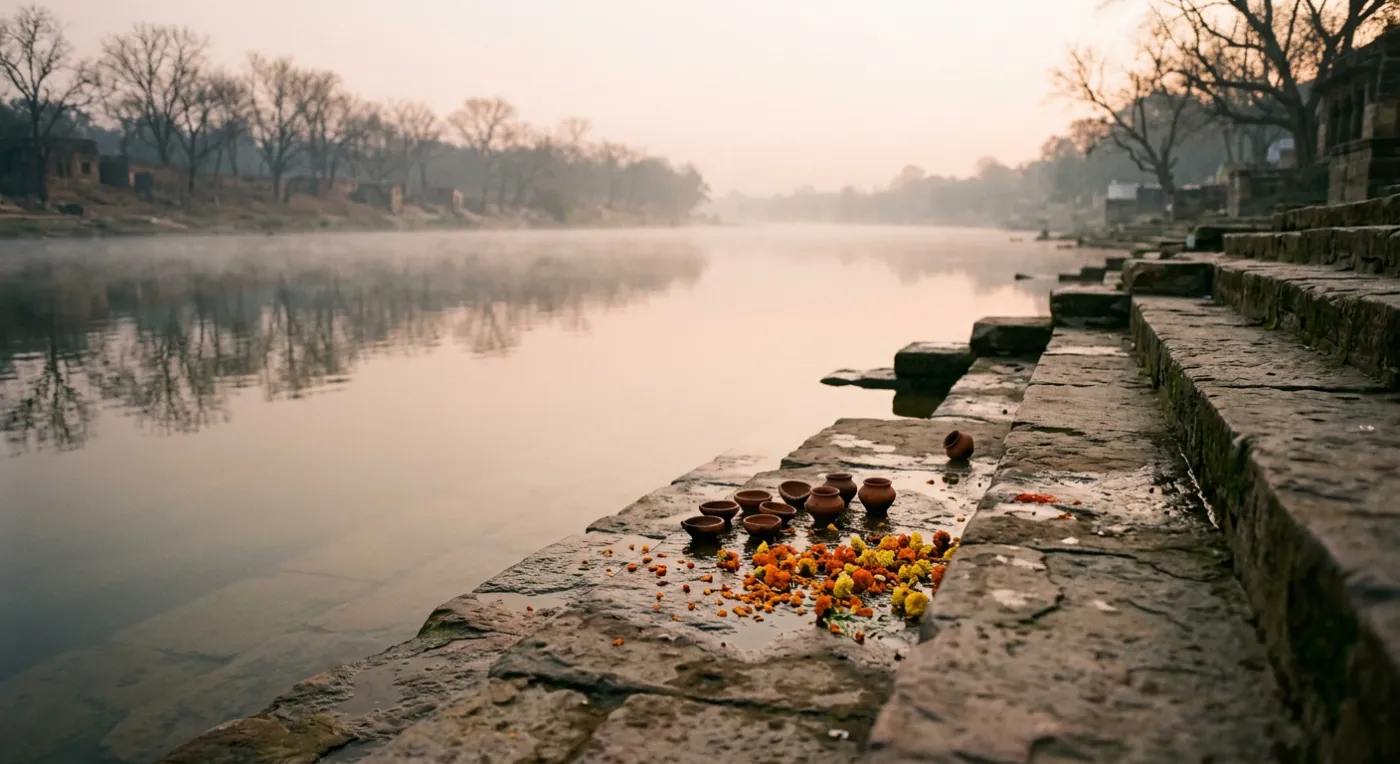
Families arranging shraddh usually plan the travel first and fit the rituals in. It works the other way round: the ritual windows are fixed, mostly early morning, and everything else on the itinerary is arranged backwards from them.
The three sites
| Site | Where | When | Allow |
|---|---|---|---|
| Kashi | Pishach Mochan, Varanasi | Afternoon window | 3–4 hours |
| Gaya | Falgu ghat, below Vishnupad | From around 05:30 | 2–3 hours |
| Prayagraj | Triveni Sangam, by boat | From around 06:30 | 3 hours including the boat |
Not everyone performs all three. Gaya alone is the most common, and is considered sufficient by most traditions. The full circuit of Kashi, Gaya and the Sangam is undertaken where the family wishes to complete it comprehensively.
What the pandit does, and what he is paid
The pandit conducts the sankalp, guides the offering of the pind and performs the tarpan. At Gaya the pandits are hereditary Gayawal families with their own registers of the households they have served, sometimes across generations — if your family has a record there, it is worth asking.
Dakshina is negotiated, not fixed, and it is between you and the pandit. Any operator quoting a single all-in price that silently includes it is guessing on your behalf. We arrange the pandit and the timing; what you offer is yours to decide.
What to bring
- The samagri — rice, black sesame, barley flour, kush grass, flowers and a cloth. Available at all three sites and usually easier to buy there than to carry.
- The names and gotra of those for whom the ritual is performed. The pandit will ask at the sankalp.
- White or unstitched cloth where the family tradition requires it. Ask an elder rather than an operator.
- Cash in small denominations. Card is not used at the ghats.
How the drive fits around it
Varanasi to Gaya is 250 km and about five hours. With a 05:30 ritual window at the Falgu, that means arriving the night before — a same-morning drive is not possible. Gaya to Prayagraj is a long leg of around seven hours, which is why our four-day circuit puts a night in each city rather than attempting returns.
Pitru Paksha
The fortnight in September or October is the traditional period and Gaya is at its fullest. Accommodation should be booked months rather than weeks ahead, the ghats are crowded from before dawn, and pandits are working continuously. Outside Pitru Paksha the rituals are performed year-round and the experience is considerably calmer.
What we do and do not arrange
We arrange the vehicle, the hotels, and a pandit at each of the three sites, and we build the day around the ritual window rather than around sightseeing. We do not set the dakshina, supply the samagri, or advise on which traditions your family should follow — those belong with your family and the pandit.
Common questions
- What time is pind daan performed at Gaya?
- The window at the Falgu ghats is early morning, typically from around 05:30. It is fixed, which means arriving in Gaya the night before — a same-morning drive from Varanasi is not possible at 250 km.
- Do I need to perform pind daan at all three tirthas?
- No. Gaya alone is considered sufficient by most traditions and is the most commonly performed. The full Kashi, Gaya and Sangam circuit is undertaken where a family wishes to complete it comprehensively.
- Is the pandit's dakshina included in your package?
- No, and deliberately so. Dakshina is negotiated between you and the pandit rather than fixed. We arrange the pandit and the timing; the offering is yours to decide.
- When is Pitru Paksha?
- A fortnight in September or October, the traditional period for shraddh. Gaya is at its busiest then — book accommodation months ahead, or travel outside it for a considerably calmer experience.
Planning this trip?
Send your dates and group size and we will build an itinerary around them.