
The Varanasi boat ride, explained properly
· 7 min read
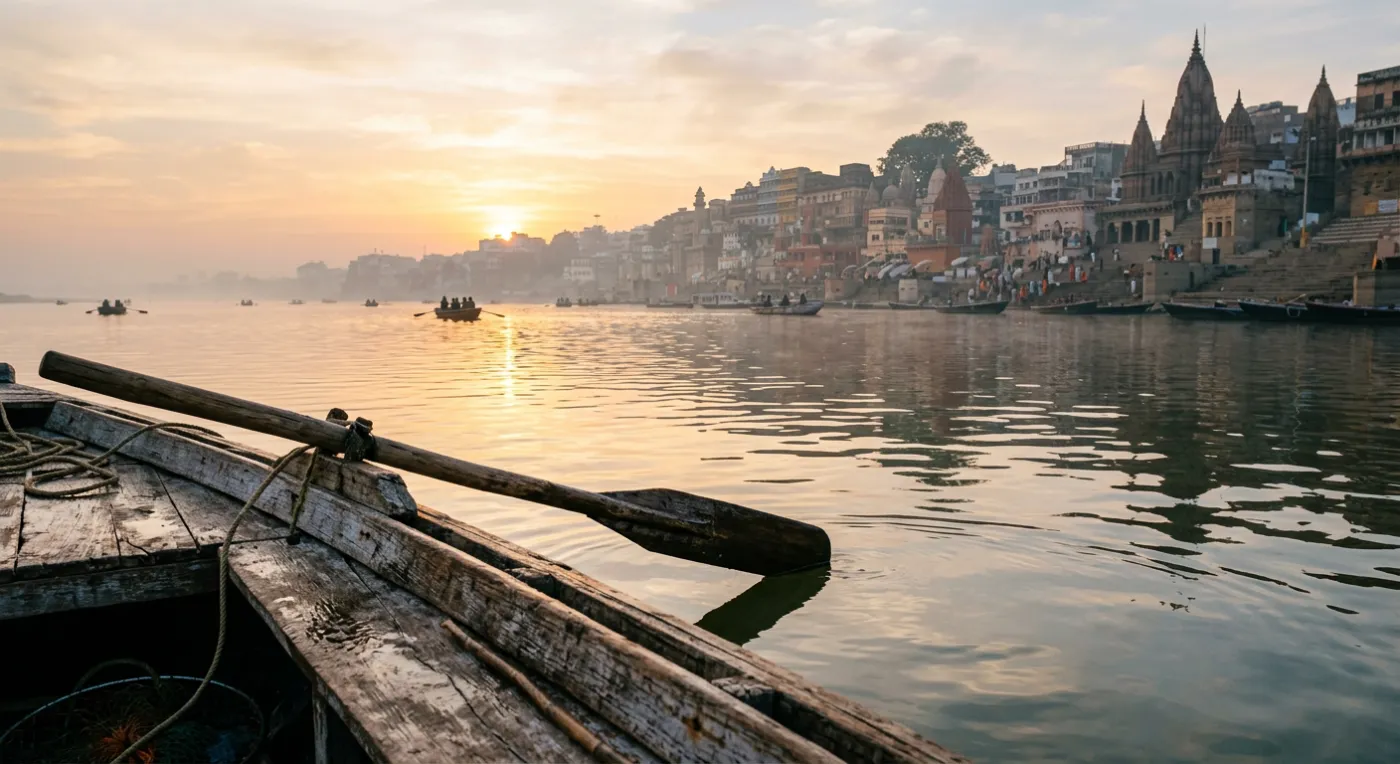
Ask anyone what they remember from Varanasi and a striking number say the boat rather than the temple. It is also the thing most often bought at the wrong hour, in the wrong kind of boat, at a price negotiated from a weak position.
Sunrise or evening?
They are entirely different experiences and both are worth doing if you have two mornings.
| Sunrise | Evening | |
|---|---|---|
| Board by | 05:45 in winter, 05:15 in summer | 17:30 for the aarti |
| What you see | The ghats waking; bathers, light on the water | The aarti from the water, lamps, crowds |
| Noise | Almost none | Bells, chanting, crowds |
| Best for | Photography, quiet, the city as it lives | The ceremony without the crush on the steps |
If you do only one, do the sunrise, and do it at 05:45 rather than 07:00. By seven the light is flat, the river is busy and the thing you came for has already happened.
Rowing, not motor
Motor boats are faster, cheaper per head on a shared basis, and they remove the quiet — which on a dawn river is the entire product. A rowing boat also stops where you ask, which matters if you want to sit still in front of a particular ghat rather than pass it at speed.
What a fair price looks like
On an ordinary night a shared rowing boat seat is a few hundred rupees, and a private rowing boat for a small group runs into the low thousands for ninety minutes. Prices are negotiated and they move sharply based on how uncertain you look. Agree the number, the duration and the route before boarding rather than after.
Dev Deepawali is a different market entirely
On 24 November 2026 boat prices run five to ten times the normal tariff, because the number of licensed vessels is fixed and the demand falls on one night. Shared rowing from around ₹2,999 a seat, bajra double-deckers from ₹6,999, private boats from ₹45,000. That is genuine scarcity rather than a markup, though the spread between operators is very wide.
Safety, briefly
- Life jackets should be on the boat. On festival nights they are checked; on ordinary mornings, ask.
- Do not board an overloaded boat because it is leaving now. There will be another.
- During the monsoon the current is strong and operations are restricted or suspended — a cancelled boat is a safety decision, not an inconvenience.
- Photography of the cremation ghats from the water is tolerated at a distance and resented up close. Use judgement.
What we include
Every Varanasi package here includes a sunrise boat as standard, because it is the single highest-value ninety minutes in the city. The Dev Deepawali evening boat is booked separately on every package, at every operator, because its pricing bears no relation to the rest of the year.
Common questions
- What time should I take a boat ride in Varanasi?
- Board at 05:45 in winter or 05:15 in summer for the sunrise, which is the best ninety minutes the city offers. By 07:00 the light is flat and the river is busy.
- Is a rowing boat or motor boat better in Varanasi?
- Rowing, for the sunrise. The quiet is the entire point of a dawn river and a motor removes it. A rowing boat also stops where you ask rather than passing at speed.
- How much does a boat ride cost in Varanasi?
- On an ordinary day, a few hundred rupees for a shared rowing seat and low thousands for a small private boat over ninety minutes. On Dev Deepawali it runs five to ten times that — from ₹2,999 a seat to ₹45,000 for a private boat.
Planning this trip?
Send your dates and group size and we will build an itinerary around them.